

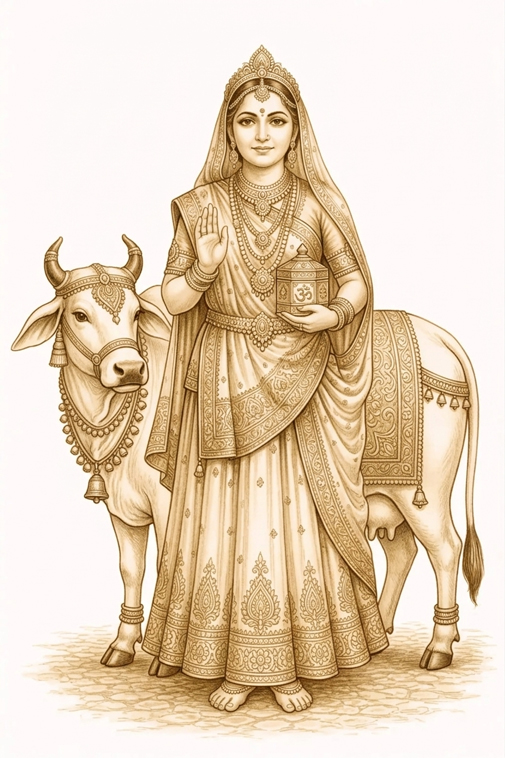
Rani Sati Dadi
At Jhunjhunu in Rajasthan, devotees honour Rani Sati as Dadi Ji and remember her through the regional legend of Narayani. The story connects her with Tandan and a conflict over a prized horse. Its details belong to community and temple traditions, rather than a single securely dated biography. Her shrine and its devotional songs remain central to the way followers remember her.
Mool Mantra
Om Shri Rani Sati Dadiyai Namah
Day
Friday
Color
Sindoor Red
Bhog
Fruits
Choose Reading Section
Select one section and continue your paath in focused reading mode.
Meaning of the Name: Rani Sati Dadi
Rani Sati is the traditional title of the figure revered at Jhunjhunu as Narayani Devi. Rani means “queen”; Sati here belongs to her remembered legend and devotional title. Devotees also call her Dadiji, an affectionate address meaning grandmother.
Rani Sati Dadi: Narayani’s Legend and the Shrine at Jhunjhunu
At Jhunjhunu in Rajasthan, devotees honour Rani Sati as Dadi Ji and remember her through the regional legend of Narayani. The story connects her with Tandan and a conflict over a prized horse. Its details belong to community and temple traditions, rather than a single securely dated biography. Her shrine and its devotional songs remain central to the way followers remember her.
Narayani and the regional account
Some later community retellings connect Narayani with Uttara, Abhimanyu’s wife. This is a separate devotional association, not an episode to be inserted into the Mahabharata as established history. Uttara’s own epic story continues through the birth and survival of Parikshit.
In the age of Kali, she is believed to have been born as Narayani Devi in a respected Agrawal family in Rajasthan. From childhood, she was known for her righteousness, courage, and virtuous nature. She was married to a brave and noble man named Tandan Ji. Their life together was filled with love, respect, and religious values.
According to the popular legend, Tandan Ji possessed a rare and beloved horse. The son of a local ruler attempted to seize the horse by force. When Tandan Ji opposed this act, the dispute escalated and eventually led to a confrontation.
Tandan Ji courageously fought to defend his honor and uphold justice. He displayed extraordinary bravery in battle but ultimately attained martyrdom. When Narayani Devi received this news, she experienced deep sorrow, yet maintained remarkable inner strength and composure.
Regional retellings say that Narayani entered her husband’s funeral fire after his death. This is a tragic part of the legend, not a practice to recommend or imitate. The account should be narrated with compassion for loss, without describing a woman’s death as a duty or proof of the worth of her devotion.
The tradition turns from Narayani’s death toward remembrance of her as a protective mother. Blessings attributed to her are expressed through family prayers and songs. Their devotional meaning is a request for courage and care for the living, not a demand to repeat the tragedy told in the legend.
Inspired by her sacrifice and spiritual power, people gradually began to revere her as a divine mother. Over time, her fame spread far and wide, and she became known as Rani Sati Dadi.
The temple of Rani Sati Dadi in Jhunjhunu, Rajasthan, is today regarded as her principal shrine. Every year, millions of devotees visit the temple to seek blessings for family happiness, prosperity, and protection.
The central message of Dadi Ji’s story is not merely sacrifice, but also courage, righteousness, inner strength, dedication to family, and unwavering faith in God. For this reason, she continues to inspire and guide countless devotees.
Dadi Ji’s shrine and community remembrance
The story of Rani Sati Dadi teaches the values of courage, loyalty, inner strength, and unwavering faith in God. She inspires people to walk the path of service, righteousness, and devotion.
Symbol of Loyalty and Dedication
Rani Sati Dadi represents steadfast loyalty to duty, family, and dharma. Her life inspires devotion to one’s values and responsibilities.
Presiding Force of Courage and Inner Strength
Remembering Dadi Ji is believed to grant devotees the courage and confidence needed to face difficult circumstances.
Family Welfare and Protection
Devotees believe that her blessings bring peace, harmony, unity, prosperity, and protection to the family.
Message of Upholding Truth and Righteousness
Her story teaches that one should stand firmly for truth, honor, and justice, even when circumstances are challenging.
Inspiration for Service and Compassion
Dadi Ji’s life emphasizes selfless service, charity, and concern for the welfare of others. She conveys a message of compassion and goodwill.
Unwavering Faith in God
Her story demonstrates the importance of maintaining faith in God even during life's most difficult moments. Such faith becomes a source of inner strength.
Significance of the Jhunjhunu Shrine
The Rani Sati Dadi Temple in Jhunjhunu, Rajasthan, is a major center of devotion. Visiting the shrine and offering prayers is believed to bring mental peace and spiritual satisfaction.
An Inspiring Form of Feminine Strength
The life of Rani Sati Dadi is regarded as an inspiring example of feminine strength, patience, courage, and spiritual power.
Guidance During Difficult Times
Devotees believe that remembering Dadi Ji helps them make wise decisions and maintain emotional resilience during challenging periods of life.
Importance of Faith and Devotion
Her worship teaches that sincere faith, good conduct, and devotion can bring positive transformation into one's life.
Rani Sati Dadi is revered as a sacred embodiment of courage, loyalty, sacrifice, inner strength, and maternal protection. Her life conveys the values of dedication to dharma, truth, family, and God. Those who remember Dadi Ji with faith and devotion are believed to receive courage, mental peace, family happiness, and spiritual inspiration. Her blessings continue to inspire people to walk the path of righteousness, virtue, and positivity. Jai Dadi Ji!
Choose Reading Section
Select one section and continue your paath in focused reading mode.