Tulsi Mata
Tulsi is welcomed into many homes as a living form of devotion to Vishnu. Her sacred stories include accounts of Vrinda and Jalandhara, and a separate cycle concerning Tulsi and Shankhachuda. These narratives differ in their relationships and sequence. They converge in the reverence offered to the plant and in Tulsi Vivah, where devotees celebrate her connection with Vishnu or Shaligram.
Simple Tulsi Mantra
Om Shri Tulasyai Namah
Day
Thursday
Color
Green
Bhog
Panchamrit
Choose Reading Section
Select one section and continue your paath in focused reading mode.
Meaning of the Name: Tulsi Mata
Tulsi, or Tulasi in Sanskrit, is traditionally explained as “the incomparable one”. The name is used both for the sacred plant and for the Goddess worshipped through it.
Tulsi Mata: Vrinda’s Story and the Sacred Plant of Vishnu Worship
Tulsi is welcomed into many homes as a living form of devotion to Vishnu. Her sacred stories include accounts of Vrinda and Jalandhara, and a separate cycle concerning Tulsi and Shankhachuda. These narratives differ in their relationships and sequence. They converge in the reverence offered to the plant and in Tulsi Vivah, where devotees celebrate her connection with Vishnu or Shaligram.
The distinct stories of Vrinda and Tulsi
One tradition connects the origin of Tulsi with the Samudra Manthana (Churning of the Ocean). As the gods and demons churned the cosmic ocean, many divine treasures and celestial beings emerged. At that time, a radiant divine energy manifested through the will of Lord Vishnu and appeared as Tulsi. Lord Brahma named her Tulsi, meaning 'the incomparable one.' The gods praised her, and Lord Vishnu accepted her as his beloved. Since then, Tulsi has been regarded as especially dear to Lord Vishnu.
In the Shankhachuda cycle, Tulsi is associated with the family of Dharmadhvaja and Madhavi. Her austerities and marriage belong to that narrative. The Jalandhara cycle names Vrinda as his wife and tells its own sequence of events. Similar themes in the two stories do not make every name and relationship interchangeable.
The Shankhachuda story connects the protection surrounding the warrior with his wife Tulsi and describes Vishnu assuming her husband’s appearance. The breaking of that protection allows Shiva to defeat Shankhachuda. Tulsi’s distress matters to the account: her response is part of the sacred narrative, rather than something to omit while praising the victory.
Tulsi’s curse and Vishnu’s association with the Shaligram stone belong to this cycle of grief and transformation. A related but distinct account concerns Vrinda and Jalandhara. In household worship, the sacred plant and the stone bring this larger devotional memory into Tulsi Vivah without requiring every family to recount the same version.
The festival of Tulsi Vivah is considered highly auspicious. On Dev-Prabodhini Ekadashi in the month of Kartik, Lord Vishnu is believed to awaken from his cosmic slumber. On this occasion, the ceremonial marriage of Tulsi Mata and Lord Vishnu in the form of Shaligram is performed. The celebration is observed with devotion and joy. Witnessing or performing Tulsi Vivah is believed to bestow great spiritual merit and bring prosperity and blessings to the household.
A popular devotional story speaks of a poor Brahmin who faithfully cared for a Tulsi plant in his courtyard every day. One night, Goddess Lakshmi appeared to him in a dream and said, 'Because you lovingly serve Tulsi Mata every day, Lord Vishnu is pleased with you. Your poverty will soon end.' From that day onward, the Brahmin's fortunes changed. He gained knowledge, prosperity, and happiness. This story highlights the belief that devotion to Tulsi pleases both Lord Vishnu and Goddess Lakshmi.
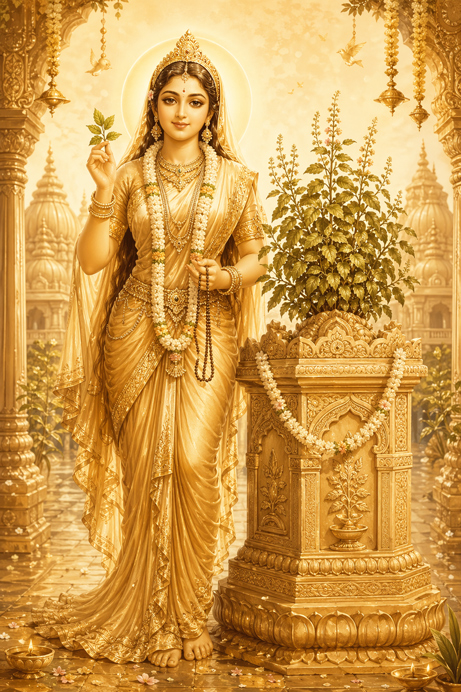
Maa Tulsi is often depicted as graceful and radiant, clothed in green garments and holding a Tulsi rosary. Her green color symbolizes life, nature, renewal, and purity. Planting and nurturing a Tulsi plant in the home is considered highly auspicious. It is believed that negative influences, disease, and sorrow do not remain where Tulsi is lovingly cared for. Thus, Tulsi Mata is honored as the guardian of the home, the embodiment of purity, and a compassionate mother who fulfills righteous wishes.
Tulsi Vivah and daily service to the plant
The story of Maa Tulsi teaches that sincere devotion and complete surrender draw divine grace. Through her unwavering devotion, Tulsi attained the eternal favor of Lord Vishnu. Her life demonstrates that love, service, and devotion are among the highest paths to spiritual fulfillment.
Vishnupriya — Beloved of Lord Vishnu
Tulsi Mata is known as Vishnupriya and Haripriya because she is especially dear to Lord Vishnu. Traditional worship of Vishnu is considered incomplete without offering Tulsi leaves. Such offerings are believed to quickly earn the Lord's blessings and fulfill righteous desires.
Destroyer of Sin and Goddess of Purity
The sight, touch, and service of Tulsi are believed to purify the heart and remove accumulated sins. Scriptures praise the practice of circumambulating the Tulsi plant, comparing its purifying effect to sunlight dispelling darkness. Tulsi sanctifies both the home and the mind.
Queen of Medicinal Herbs
Tulsi is revered in Ayurveda as one of the most beneficial medicinal plants. Its leaves are traditionally valued for their health-supporting properties and are commonly used in remedies for respiratory and seasonal ailments. For this reason, Tulsi Mata is associated with health, vitality, and longevity.
Protector of the Home and Bestower of Prosperity
A household with a Tulsi plant is traditionally believed to be blessed by Goddess Lakshmi. Tulsi is regarded as a source of positive energy, spiritual protection, and purity. Caring for the plant symbolizes maintaining a sacred and harmonious home environment.
Bestower of Liberation
Tulsi Mata is also revered as a giver of liberation. Many devotional traditions associate Tulsi leaves, Tulsi malas, and Tulsi worship with spiritual advancement and closeness to Lord Vishnu. Serving Tulsi is considered a simple yet powerful path of devotion.
Ideal of Devotion and Surrender
As Vrinda, Tulsi exemplified unwavering devotion, loyalty, and spiritual dedication. Her life serves as an example of steadfast faith and selfless love. She teaches that sincere devotion ultimately receives divine recognition and grace.
Guardian of Nature and the Environment
The Tulsi plant holds ecological as well as spiritual significance. Reverence for Tulsi encourages care for nature and respect for the environment. Her worship reminds devotees that protecting creation is itself a sacred responsibility.
Special Importance During the Month of Kartik
The month of Kartik is considered especially dear to Tulsi Mata. Lighting a lamp near Tulsi and offering daily prayers during this period are cherished devotional practices. Tulsi worship during Kartik is believed to bring spiritual merit and divine blessings.
Tulsi Vivah — Festival of Auspiciousness
Tulsi Vivah is celebrated between Dev-Prabodhini Ekadashi and Kartik Purnima. During this festival, the ceremonial marriage of Tulsi and Shaligram is performed. The occasion marks the beginning of the traditional season for auspicious ceremonies and celebrations.
Daily Worship and Importance in Household Life
Daily Tulsi worship remains an integral part of many Hindu households. Offering water, lighting a lamp, chanting prayers, and circumambulating the plant are considered sacred practices. Tulsi leaves, Tulsi water, and Tulsi malas are all valued as aids to physical well-being and spiritual growth.
Maa Tulsi is far more than a sacred plant; she is the embodiment of devotion, purity, service, health, and liberation. She is beloved to Lord Vishnu, revered as the queen of medicinal herbs, and honored as the protector of the household. Through her worship, devotees seek purity, prosperity, spiritual growth, and ultimately liberation. Tulsi Mata teaches that selfless service, devotion, and love are among the highest virtues of life. Jai Maa Tulsi!
Choose Reading Section
Select one section and continue your paath in focused reading mode.